How George Williams Misrepresents the Constitution

Dudley Horscroft
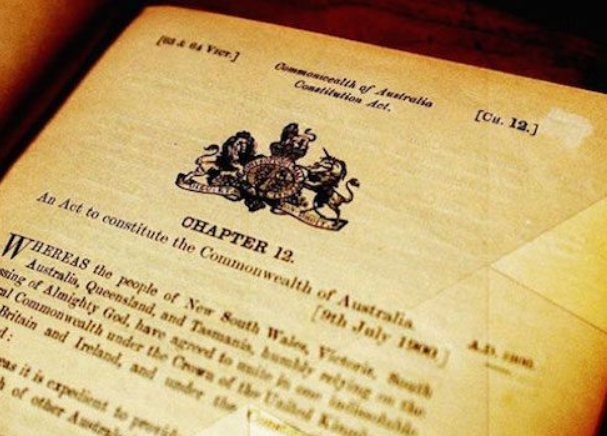
I doubt I have seen a greater misrepresentation of the Constitution than the October 9 opinion piece in The Australian by George Williams, a professor of law at the University of NSW, who writes:
Australia’s Constitution was drafted at two conventions in the 1890s. Neither included Indigenous peoples. Unsurprisingly, the Constitution that came into force in 1901 failed to represent their interests or aspirations. In fact, it excluded and promised discrimination against them … This reflected the framers’ view that Indigenous peoples were in terminal decline.
When the founding fathers wrote the Constitution there was no Commonwealth electoral law, so state electoral law was used until the Commonwealth Franchise Act 1902 took effect. To prevent states that denied the vote to Aborigines (Queensland and Western Australia) gaining extra seats by virtue of their presumed large numbers of Aborigines, Section 25 was inserted to penalise those states, not to penalise the Aborigines. As the other states had universal male suffrage, Section 41 was included in the Constitution to ensure that Aborigines in those states were not excluded from voting in Commonwealth elections. Section 41 has never been changed.
Section 127 did not mention the Census! Enumerating the Aboriginal population was a state matter until 1971. Section 127 was a qualification to Section 24 which provided “The number of members chosen in the several States shall be in proportion to the respective numbers of their people . . . ” Again so that WA and Qld could not get extra seats by virtue of an assumed large number of Aborigines.
Around the time of Federation, there were concerns about the large numbers of Kanakas (South Sea Islanders) entering Australia to work under contract. The immigration power (S.51 xxvii) could control their entry, but not require them to depart at the end of their contracts. Hence S.51 xxvi – originally “The people of any race, other than the Aboriginal race in any State, for whom it is deemed necessary to make special laws.” This was the Constitution method of being able to apply Commonwealth law to the Kanakas, who were neither British subjects or Australian citizens. It also applied to Chinese or Indian immigrants, but not to those born in Australia or who were British subjects from India or China.
Note carefully that the wording prevented the Commonwealth from applying Commonwealth law to Aborigines — they were treated identically to all other Australians . No discrimination there!
The 1967 referendum enabled the Commonwealth to make discriminatory laws for Aborigines, as one supporter later said “It was never about the vote, it was always about the money.” Justice Kirby may well have said the words quoted, but in the High Court hearing two judges said the power could be used for advantage and disadvantage, two (one of whom was Justice Kirby) said it could not be used to disadvantage a racial group, and the other two (only six judges sat on the case) did not offer an opinion.
 Nelle's journey