Colin Packham The Australian August 21, 2023
Victoria will pay AGL Energy to keep the state’s largest electricity generator open until 2035 if Australia has not yet developed enough renewables, but the power station is enduring financial losses. Victoria has legislated Australia’s most aggressive energy transition policy that sees the state commit to cutting emissions by between 75 and 80 per cent by 2035, and bring forward its net-zero target by five years to 2045. To achieve this, Victoria will prohibit coal power generation in the state by 2035.
While Victoria has taken a hardline, there is widespread scepticism about the capacity of the state to deal with loss of coal generation, especially if one of the dominant electricity generators were to retire earlier than scheduled.
In a move that will temper market concern but evaluate the political discomfort for the state government that was one of the key opponents to coal being included in a so-called capacity mechanism, AGL said it has entered a deal that will manage the retirement of its Loy Yang A coal power station.
Victoria in 2022 opposed efforts by the former federal Coalition government to develop a capacity mechanism, which would have paid generators – irrespective of the energy source – to ensure sufficient capacity. Victoria and other opponents dubbed the policy coal-keeper.
AGL last year said it would shutter its Loy Yang coal power station in 2035, a decade earlier than previously planned, after sustained pressure from investors — including the company’s largest shareholder billionaire Mike Cannon-Brookes.
Australian energy market authorities believe Loy Yang is vital for Australia’s energy security until 2035, but coal power stations are under mounting economic pressure.
Typical coal power stations are inflexible and generate electricity throughout the day with little variance in output. But a rise of solar and wind generation has sent the wholesale price of electricity to zero or even in negative territory, meaning many coal generators are often making losses during daylight hours.
Losses are pared later in the day when the sun sets, but a rise of batteries threatens to exacerbate the financial losses of coal generators
AGL chief executive Damien Nicks earlier this month said the company had invested significant sums to ensure its coal fleet has flexibility and therefore less susceptible to the economic pressures,
Still, the rise of renewables threatens the economics of even the most flexible of fossil fuel generators.
In a deal that ensures AGL does not close Loy Yang prematurely when the broader National Electricity Market requires the generation capacity, Victoria has agreed to share any future financial pain with the retailer until 2035 – effectively safeguarding the future of a generator that produces about 30 per cent of the state’s electricity.
AGL did not disclose the financial terms of the arrangement.
If Australia has developed enough renewable energy generation capacity before 2035 and Loy Yang is enduring financial losses, AGL and Victoria could jointly agree for the early exit of the generator, but it will require endorsement from Australia’s energy market operator that there is sufficient capacity to compensate, The Australian understands.
However, Australia is struggling to build enough renewable energy generation sources to replace the fossil fuel capacity leaving the system already, so an early exit on the current trajectory remains unlikely.
Such is the pace of building renewables, there is also heightened alarm at the capacity to adequately replace Loy Yang in 2035. If Australia does not build enough renewables to replace coal, power prices will increase.
The opening week of this profit-reporting season showed a write-down at AGL after it brought forth the closure of its Loy Yang A Power Station by ten years, according to Sky News Business Editor Ross Greenwood. “But energy…
Victoria has used these so-called closure contracts before, striking a deal with EnergyAustralia to manage the closure of its Yallourn coal power station in 2028.
Ensuring Loy Yang stays open until 2035 will give the state sufficient time to progress offshore wind, the cornerstone of its plan to wean from coal.
The Victorian government last year set a target of generating the equivalent of about 20 per cent of its energy needs from offshore wind within a decade.
The target then doubles to 4GW by 2035 and 9GW by 2040. In all, Victoria sees potential for 13GW of offshore wind capacity by 2050, five times the state’s current renewable generation.
The target has drawn a plethora of some of the world’s largest offshore wind developers, but even the most advance project – Star of the South – is unlikely to generate the first electricity before 2030 and other jurisdictions are pushing the generation source, so Australia may struggle to secure much needed supplies in time to guarantee it meets ambitious targets.
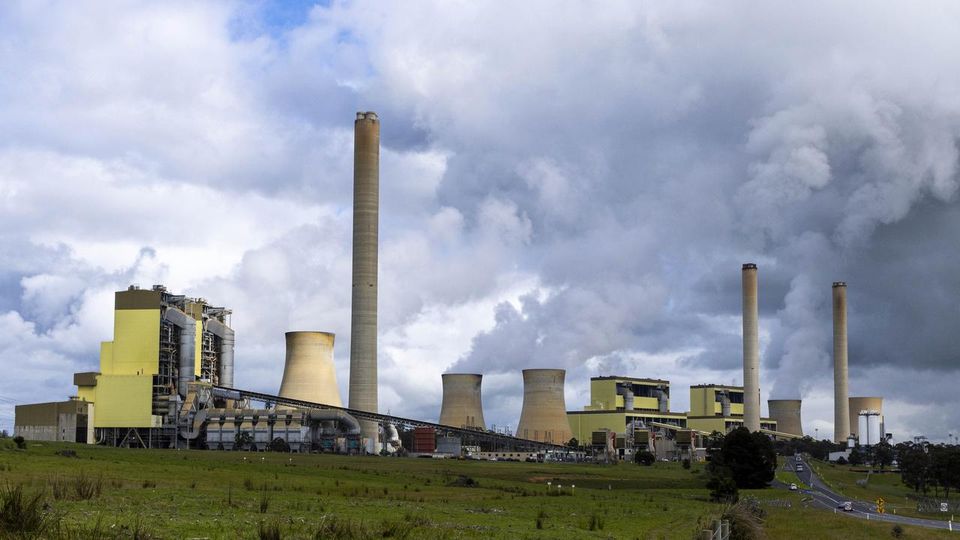
1/ Loy Yang power station in the La Trobe valley. Picture: Aaron Francis
 Nelle's journey