The Aborigines Lost in Translation
Tony Thomas
The Australian Broadcasting Commission’s wokerati want me to use Aboriginal words in my everyday discourse. They’d like me to say at dinner parties that I grew up in Boorloo (formerly called “Perth”), moved to the press gallery in Ngunnawal Country (“Canberra”) and finally settled down in Naarm (formerly “Melbourne”) out near ‘Mirring-gnay-bir-nong’, (“Maribyrnong”) which translates as ‘I can hear a ringtail possum’.
As the ABC puts it in their 2019-22 Reconciliation Action Plan (RAP), it wants Aboriginal languages and cultures normalised to become a part of my daily life, creating openings “to start conversations and to embrace and form personal connections with Australia’s ancient cultures.” (p6).
The ABC’s inescapable avalanche of Aboriginal words and acknowledgements and tributes is, it says, just
the first stage of a longer journey … The overarching project of fostering a richer and more inclusive national conversation that the ABC is committing to will take many years and will continue beyond the end of this Elevate RAP and into the next. It is one small contribution to the broader journey to reconciliation. (p6).
A key goal is indoctrinating small kids to kow-tow to the Aboriginal Industry. For example, ABC Kids launched 27 episodes of Little Yarns where tots learn a word of two while absorbing the ABC’s version of Aboriginality – “family, nature, culture and belonging.”[1] Play School took up the pledge with “Specials…including the landmark episode, Acknowledgement of Country, celebrating Aboriginal culture and language.”[2]
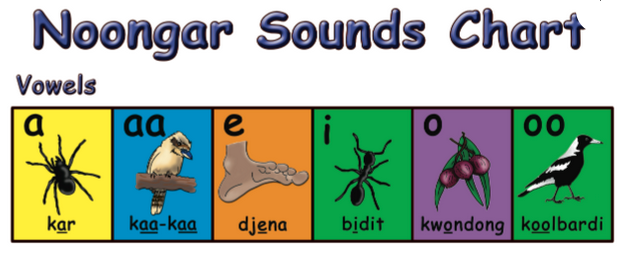
ABC classroom materials combine the usual Disneyfied version of Aboriginal culture with wallows in victimhood and massacres. A small example: Aboriginal songwriter and activist Della Rae Morrison, born in Narrogin, WA, praises kids singing their pop-rap songs in Noongar, and says, “We almost lost our language since the stolen generation, and my grandparents being told in the missions that they can’t speak their language, and if they did, they’d have it flogged out of them. So I’ve grown up with my grandmother never speaking the language to me.” Is there evidence for such floggings – at which missionary centre, and when? Bob Hawke’s uncle, Bert, was a Labor Party organiser in those parts from 1928 and held the nearby seat of Northam from 1933-68. Was he uninterested in such (alleged) barbarity in his bailiwick?
This essay appears in our Voice online-only edition.
Subscribers and non-subscribers alike can download
the entire August issue by clicking this link
The same program says only 250 out of 30,000 Noongar speak the language, presumably the remote elderly, so its survival prospect is dim.
Radio National Breakfast ran a piece last January quoting Sydney University Linguistics Professor Jakelin Troy with her prescription that every Australian school should teach an Aboriginal language. She is described by the ABC as a Ngarigu woman (the Ngarigu inhabit Snowy Mountains country). Professor Troy says thousands of school students are already studying a local language, and she has designed a K-10 syllabus across all school ages nationally.
In the article she emphasises her own Aboriginal status a dozen times, e.g. “her community is starting to use their language again”; she has learnt a corroboree ceremony song in “my language”; “I greet people in my language”; and young Australians love engaging with “who and what we, as the Indigenous people of Australia, are.”
The Dark Emu Exposed research group has sought to validate her Aboriginality claim, writing, “Extensive genealogical investigations into her maternal and paternal family trees has failed to find even one Aboriginal ancestor. In our opinion, based on these investigations, allegations that Jakelin Troy is not Aboriginal by descent appear to be valid. We are unaware of any genealogical evidence that has been made public by Professor Troy herself to substantiate her claims for her Aboriginality.” I assume her claim is based on her own valid research and Dark Emu Exposed is in error. But I think it’s in her own interest to answer the query with documentation, rather than allowing it to distract from her Aboriginal language advocacy.
The ABC RN Breakfast item also quotes Professor Felicity Meakins, a Queensland University linguist. She says that “the languages have been silenced as the result of brutal colonial policies” including via the stolen generations. She wants curricula to support bilingual education, i.e. Indigenous and English language. She warns that Australia could come under critical scrutiny from the United Nations’ UNESCO for loss of local languages. She wants them to be learnt and spoken not just in schools but “across a wide variety of domains”, including the arts. She cites how WA’s Noongar have translated versions of Macbeth into the Noongar language.
The ABC really means business with its RAP. Its progress is monitored both by Karen Mundine at Reconciliation Australia and the ABC’s own Bonner Committee reporting direct to MD David Anderson.[3] The ABC is quite frank about its intended transformation of the Australian way of life:
The ABC’s vision for reconciliation is an Australia in which Aboriginal and Torres Strait Islander names, voices and languages—and the culture and wisdom they reflect—become an everyday part of the national vocabulary.
It will know that this has been achieved when the words, stories and traditions of Australia’s First Peoples have been so embraced and integrated into the way Australians speak as to be unremarkable.[4]
The language push, incidentally, seems to involve yet another revenue stream for the Aboriginal Industry. The ABC’s dousing of words onto their airwaves is always preceded by “rights and release forms enabling Indigenous communities to retain the copyright and ownership of their cultural knowledge and languages.”[5]
Perhaps this ABC exercise is well-meaning but dopey? Yes, judging by Gary Johns in his impeccably-documented book this year, The Burden of Culture, a synthesis of 30 years’ research. Johns has been writing and researching in this field since 1990 when, as a Labor member of parliament, he was a close observer of the Coronation Hill debacle. That was when the Hawke government, in search of green second preferences, made a decision on false evidence preventing mining on Aboriginal land.[6]
Johns describes the bilingual push as counter-productive to progress for the 20 per cent stagnating on their jobless homelands (the other 80 per cent are doing fine in suburbia). “Aboriginal languages were not built for the modern world,” he says. Language revivals just grant new powers and sinecures to the Industry’s city-based elite. The past decades of bilingual efforts in remote schools merely “gave licence to Aborigines to not only reject learning English but not attend school.” At some NT schools, Aboriginal kids’ attendance rates are as low as 14 per cent — and the government is loath to enforce attendance.[7]
Bilingual education even in the NT resulted in time-consuming translations and low English proficiency, and all but ceased in 2008. Earlier, a similar approach in WA was abandoned. These clients can only progress by proficiency in English – both spoken and written. Without literacy, they can’t engage and thrive in the wider world. “To not immerse [in English] is to cruel the chances of Aboriginal children,” Johns writes. He’s sad to see the decline in homelands, from mission-schooled literate grandparents to illiterate offspring and grandchildren. Worse, some communities now take a pride in resisting English literacy, given they can and do live on welfare.
The idea that Aboriginal kids and adults can somehow benefit from learning and reviving a near-lost local language is fanciful. There are few native speakers able to teach, and most text versions of such languages are just word lists of animals, foods and body parts, abstracted from dialogue. Any motive for kids doing the work involved is likely to dissipate by the late teens. The feds currently allocate a mere $20 million a year for such programs, a vote of little confidence, he writes.
Some documented local languages like Mudburra (aound the Barkly region, NT) involve only a tenth of the words used by a typical English speaker. Indeed there are only about ten speakers of Mudburra. Johns says only 25,000-34,000 Aboriginals speak local languages, and the percentage of speakers in 30 years has fallen from 16 per cent to 10 per cent. Only about eight languages out of 141 have more than 1000 speakers, including two Kriol languages – whereas viable languages need around 100,000, according to some overseas yardsticks .
In any event, mobile phones and readily-available vehicles are causing young people to hugely modify their local language into a Kriol or pidgin. Bess Price, of Alice Springs and a fluent Warlpiri speaker, refers to young people’s Warlpiri as ‘baby talk’ – inventing language to suit their own world. “Are young Warlpiri reading Facebook in Warlpiri?” Johns wonders. An Aboriginal participant in a research project commented, ‘Leave the culture to us and you just teach our kids to read.’
If a language dies, it just means that people are using a different language. To keep up the narrative of ‘saving the language’, bureaucrats cite various academic studies (of dubious worth) claiming improved well-being. For example, researchers claim the Barngarla people of South Australia’s Eyre Peninsula have been rescued from “linguicide” and dysfunction by language counsellors using “decolonising methodology”. But after ten years’ well-funded but circular work, the results from the sample of only 16 clients were a blank. “A men’s or women’s shed would be a lot cheaper,” Johns remarks. “Aboriginal leaders such as Noel Pearson, Marcia Langton, Pat and Mick Dodson, Megan Davis and others of the professional Aboriginal spokespersons have moved well beyond their community. I do not know whether they have been reintroduced to their language.”
Preserving the languages is very expensive and unlikely to succeed. Only a linguist would worry about losing them. Of the top ten languages being renewed in Australia, the number of speakers varies from 40 to 450, but child speakers number only 12 to 130. A ”recovered” language at Port Macquarie had not been spoken for 150 years but revived from the writings of a European Christian. Much is made of local languages surfacing in music, TV and movies like Ten Canoes. But NITV, an Aboriginal channel on SBS , has a risible 0.2 per cent of the television viewing audience.[8]
“These language initiatives are not without their problems,” Johns writes “In February 2021, the Office of the Registrar of Indigenous Corporations, for the fourth time, extended the special administration of the Central Australian Aboriginal Media Association Aboriginal Corporation. Based in Alice Springs, the media corporation was placed under special administration in March 2020 in response to its poor financial position and growing debt, exceeding $2.7 million. Further, without English, none of these programs or the corporation would have succeeded.”
Outside the cities, too many Aboriginals lack spoken and written English skills. Their need is not language and cultural revival – the culture has bad as well as good elements — but adult education and training for careers like plumbing and carpentry. That would remove them from control by the Aboriginal Industry. So the industry, such as the Lowitja Institute, continues to blame low literacy on “colonisation, exclusion and systemic racism” – purported problems for which the Lowitja Institute and its kin, rather than TAFE courses, should take charge, it says.
There are limits to recovering languages, he says. Should the English language as spoken by the First Fleet be recovered? In any event, discrete Aboriginal communities are shrinking and the growth is coming from latter-day identifiers in the cities and regions. Johns concludes,
There is no proof that reviving Aboriginal language has a beneficial effect on Aborigines. It may lift their spirits for a time, it may fascinate, but it will not unlock the knowledge they need to gain a foothold in the wider community. Aborigines do not need to revive dead languages, they do not need therapy to prove their worth, they need to learn English and skills so that they can be truly self-determining and escape the clutches of an industry hell-bent on pursuit of an ideology built on identity, which is destroying the dignity of Aboriginal people.
Adult education would be a far more productive course than language revival, and courses are readily available. They do not require capture by Aboriginal-owned and community-controlled organisations. Incompetence is no way to climb out of poverty.
What underlies this language-revival exercise? One answer is that the Aboriginal industry can no longer gain traction via cries of racism and discrimination, since Aboriginals (i.e. city-based identifiers) are now a privileged caste lauded from kindergartens upwards. Hence they want to switch from “race” to “culture” to keep the largesse flowing. Leading their “culture” propaganda is the taxpayer-funded cabal at the ABC. The wokerati there now see themselves – as set out in the ABC RAP – no longer just a news group but engineers of the Australian soul.
Tony Thomas’s latest book from Connor Court is now available:Anthem of the Unwoke – Yep! The other lot’s gone bonkers. For a copy ($35 including postage), email tthomas061@gmail.com.
[1] 2019-20 ABC Annual Report p30
[2] Ibid, p34
[3] “Evaluate the progress and effectiveness of ABC’s actions in ensuring Aboriginal and Torres Strait Islander names, voices and languages become an everyday part of the national vocabulary, and include the outcomes in the final RAP report.”
[4] ABC RAP 2019 p5
[5] Ibid p20
[6] Gary Johns was federal Labor member for Petrie from 1987-96, and a minister in the Keating government. Post-parliament he was a researcher for the conservative Institute of Public Affairs (1997-2006), an academic and an associate commissioner of the Productivity Commission (2002-04). PM Turnbull appointed him commissioner of the Charities Commission (2017-22). He has also been a president of the Bennelong Society, a conservative think-tank on Aboriginal polices. His books include Waking up to Dreamtime. Media Masters (2001), Aboriginal Self-determination. Connor Court (2011), No Contraception, No Dole. Connor Court (2016),[7] The Charity Ball. Connor Court (2014), Right Social Justice. Connor Court (2012), Really Dangerous Ideas. Connor Court (2013), and Recognise What? Connor Court (2014).
[7] The Association of Teachers of English to Speakers of Other Languages reported that only 14 per cent of very remote Aboriginal students attended school four days a week in 2020. Northern Territory News, 19 October 2021
[8] Unlike other community media which are wholly in French, Viet, Hindi, Mandarin etc, NTIV continues in English rather than local language with subtitles. This suggests NTIV is just a taxpayer funded benefit for high-profile city Aboriginal identifiers.
Show your support

 Nelle's journey