
Born #OnThisDay Saturday 27 May 1815, Australian politician and the ‘Father of Federation’, Sir Henry Parkes, was born in Warwickshire, England.
It’s a little known fact that Henry Parkes was one of Sydney’s early whistle-blowers, calling out corruption in the colonial customs service. He arrived in Sydney in 1839, aged 24, with his wife Clarinda and their new baby daughter, who had been born on the voyage out from England. Virtually penniless, he took a job as an agricultural labourer but after six months was able to get a position as a ‘tidewaiter’ with the Customs Department. A tidewaiter was responsible for recording items coming ashore from visiting ships so that the relevant customs duties could be applied.
Apparently, Henry became aware of various rorts involving alcohol being taken by Customs employees in breach of the rules. After alerting his superiors without success, he wrote to the newspapers using the name of ‘A. Citizen’ detailing what he had seen. “I might multiply instances,” wrote Mr Citizen, “but I hope I have said enough to call the attention of government to the correction of what I conceive to be a great abuse.”
According to Ian Thom, chair of the Henry Parkes Foundation and great great grandson of Parkes, “Sydney at this time was in a severe depression and Henry had a secure Government position, so rocking the boat at work was risky. Even at that young age, however, his principles were strong enough to overcome the chance that he could lose his job.”
“Henry Parkes never took advantage of his public position to enrich himself in corrupt ways,” said Mr Thom. “In this respect he was honest to a fault, battling money troubles throughout his life. We are thrilled to have Professor AJ Brown as our 2019 orator, speaking on a topic that in many ways underpinned Parkes’ career and is still so relevant today.”
See less

 One of our Melbourne Cup favourites, taken in 1977 of racehorse trainer Tommy Woodcock and stallion Reckless, the favourite for the Melbourne Cup that year. Taken by former Age photographer, Bruce Postle, the photo emphasises the affinity between man and horse like no other.
“…He looked at Reckless and Reckless looked at him and without a word his big stallion dropped down and put his head on Tommy’s chest. He reached up and tickled him under the neck and the horse closed his eyes and that was it. I took two pictures, that was it.” — Bruce Postle

#OnThisDay 27 May 1926, The City of Sydney attempted to smarten-up the blockboys in 1926 with new uniforms, as seen in this photograph. But in the background is also the reason for the blockboys’ inevitable demise.
THE BLACKBOYS — STREET LIFE
Sydney before cars was a very different place. Horses, carts, and pedestrians travelled on streets paved with woodblocks. This was the blockboy’s domain.
Known as sparrow starvers, blockboys cleaned horse dung from the streets. Usually with little formal education, they started working for the City of Sydney as young as 14. In their heyday they were equipped with uniforms, scoops on wheels with long handles and brooms, while recessed receptacles in the footpath held the manure they collected until it was taken to a depot and sold to the public as fertiliser.
At the end of World War I the City had more than 200 blockboys on its books. Despite its low status, many working-class, inner-city families keenly sought the work for their sons. Becoming a sparrow starver could lead to a job as a rubbish cart or dirt-box man. There was also an element of social distinction if you worked for the City.
The blockboys were notorious larrikins. In 1919 complaints were made to the Town Clerk that they were playing cricket and two-up on the Druitt Street side of the Town Hall. ‘”The language to passers by is most objectionable,” read one complaint. The City Surveyor issued instructions that the “playing of cricket by these youths in the Town Hall yard is to cease”‘. City records are full of reports of blockboys swearing, loitering, drinking and leaving their block early.
Their low wages made blockboys attractive to the City. However, it was later difficult to absorb them into the adult workforce. Some became night broom sweepers and street flushers, which were regarded as jobs suitable for youths. Some would move to adult labouring work in the Cleansing Branch, but there was a limited number of vacancies.
As horse-drawn vehicles gave way to motors, sparrow starvers were in declining demand, and their jobs became more dangerous. By the end of the 1920s there were only about 60 of them still employed, and over the next years the work was gradually incorporated into general street-cleaning procedures. Their demise was inevitable, but they would long be remembered, not for what they had done but for the lost way of urban living they represented.
[Photo courtesy City of Sydney Archives]

#OnThisDay 27 May 1924, construction of the Sydney, city circle railway loop. Pictured here is the northern end of Hyde Park with St James Church to the left.
[Photo courtesy State Library of NSW]
— in Sydney, NSW.

L E S T W E F O R G E T 

#OnThisDay 27 May 1922, The Hurstville Soldiers’ Memorial was officially unveiled by His Excellency Sir Walter Edward Davidson the Governor of NSW. Constructed of Bowral trachyte and located adjacent to Hurstville Railway Station, the monument is inscribed with the names of local men killed in the First World War. The designer was Mr A. Gibney, foreman for Messrs D. B. Acton & Co. contractors for the work.
HISTORY…. In late 1919, in an atmosphere of public agitation for the establishment of a public memorial for local military casualties in the First World War, the Hurstville Branch of the Returned Soldiers’ and Sailors’ League staged a ‘series of entertainments for the purpose of raising funds in aid of the Hurstville Soldiers’ Memorial’. The public were encouraged to subscribe to the fund and subscription lists were published in the local media.
At a public meeting in November 1919 convened to decide the best means to memorialise those from Hurstville who served in the war, it was announced that Mr T. MacMahon had offered land in MacMahon Street Hurstville for the purpose of constructing a memorial. The consensus at the meeting was to build a Memorial Hall incorporating a local School of Arts and a monument to local service personnel. The meeting resolved to accept the MacMahon offer and erect a building that was to be known as the Hurstville Soldiers’, Sailors’ and Nurses’ Memorial School of Arts.
A carnival was staged on Forest Road Hurstville in February 1920 to raise funds for the proposed Memorial Hall. The opening ceremony was reported to have attracted a estimated crowd of 6,000 of the total 16,000 Hurstville residents attended.
Those present at a public meeting in July 1920 unanimously resolved to rescind the former decision to construct a memorial hall in favour of the construction of a public memorial in a prominent position in the town. It was announced that the memorial fund had benefited by over £1400 as a result of the carnival in February and that £1000 of these monies would be devoted to the construction of the memorial with the balance towards the development of a memorial School of Arts.
The design tender for the Hurstville Memorial submitted by Mr Doebel, sculptor, of Marrickville, was accepted at a public meeting convened at the Hurstville Council Chambers in October 1920.
It was reported that the Memorials Advisory Board, to whom the Hurstville Memorial Committee submitted their proposal, rejected the design. In response, the committee instructed the Memorials Board to secure a design that would meet their approval. In addition, the Memorials Board rejected the site at the overhead traffic bridge on Forest Road proposed by the committee for the construction of the memorial, the Board favouring land adjoining Hurstville Railway Station which was to become the site of the memorial.
A competition conducted by the Public Monuments Advisory Board to secure a design for the Hurstville Memorial attracted 14 entrants. The winning entry was not acceptable to the Hurstville committee, however, the entry of Mr A. Gibney was suitable to both the committee and the board and a tender for construction was subsequently accepted.
By 1927, the area surrounding the memorial monument had been developed with the installation of garden plots with turf borders, concrete pathways and a flagpole.
A ceremony for the Dedication of the 1939-1945 War Memorial at the 1922 site took place on 25 November 1950. This ceremony followed a Hurstville Council decision to contribute to the costs associated with the inscription of the names of deceased local servicemen and women who served in the Second World War.
Hurstville Council resolved to adopt the recommendations of discussions with representatives of the RSL seeking to have a commemorative plaque installed at the memorial to honour those who had served in conflicts after the Second World War.
[Photo + History courtesy Georges River Libraries]
See less
— at Memorial Square.

#OnThisDay 27 May 1905, ‘Roberts Estate Carlton’ went to Auction with 87 allotments located in Botany Street, Cronulla Street, Lily Street and Carlton Parade — The two-lane Lily Street railway overpass was built in conjunction with the construction Allawah railway station, both bridge and station opened in October,1925.
[Subdivision – State Library of NSW]
See less
— in Carlton, New South Wales.

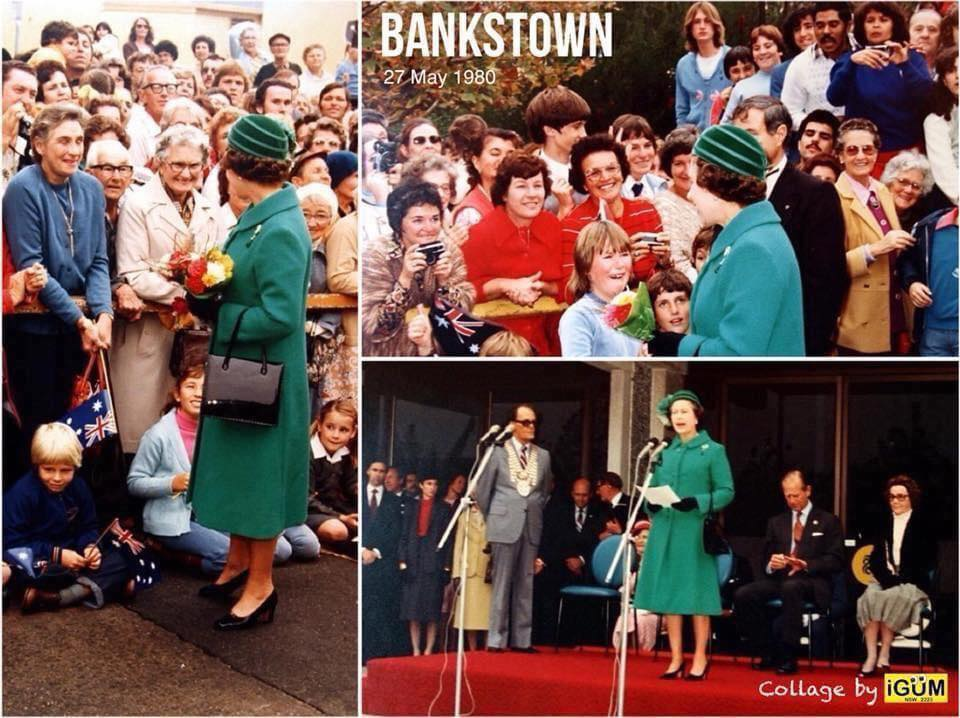
43 years ago #OnThisDay 27 May 1980, Bankstown was proclaimed a city during a Royal visit of Her Majesty Queen Elizabeth II and Prince Phillip accompanied by Sir Roden Cutler.


THE AFTERMATH 
#OnThisDay 27 May 1974, debris along with stranded vessels pictured in Kogarah Bay.
Severe storms hit Sydney’s east coast  https://m.facebook.com/story.php?story_fbid=272864108463827&id=100072207206515
[Photo courtesy Fairfax Media]
— in Kogarah Bay, New South Wales.

THE AFTERMATH
#OnThisDay 27 May 1974, the ‘Paragon Restaurant’ at La Perouse once overlooking the water pictured collapsed into the sea. The storm was so severe it caused a rethink of storm responses and coastal management.
Severe storms hit Sydney’s east coast https://m.facebook.com/story.php?story_fbid=272864108463827&id=100072207206515
[Photo courtesy Fairfax Archives]
— in La Perouse, New South Wales, Australia

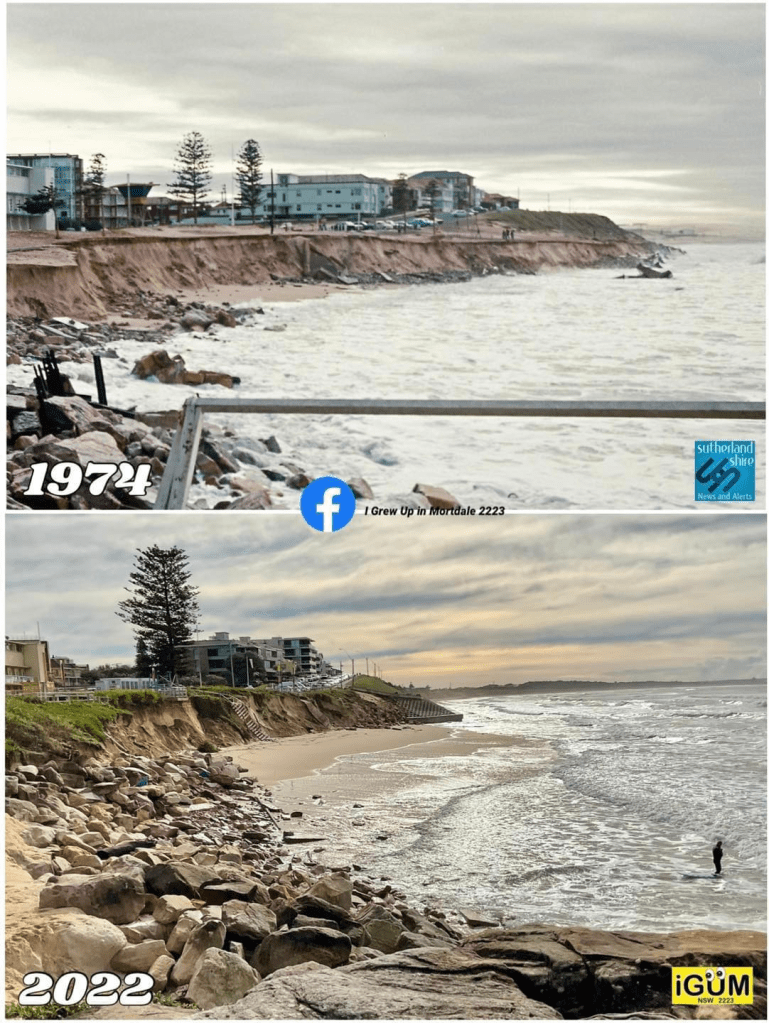
1974 << Then & Now >> 2022
CRONULLA BEACH
Cronulla, NSW. 2230
*View looking across Cronulla Beach towards Prince Street after the coastal escarpment had been undermined after big surf with North Cronulla Surfing Life Saving Club left of pic. Lifeguard tower relocated 2022 https://www.facebook.com/1504661053097610/posts/3421630648067298/
S…
See more
— in Cronulla, New South Wales
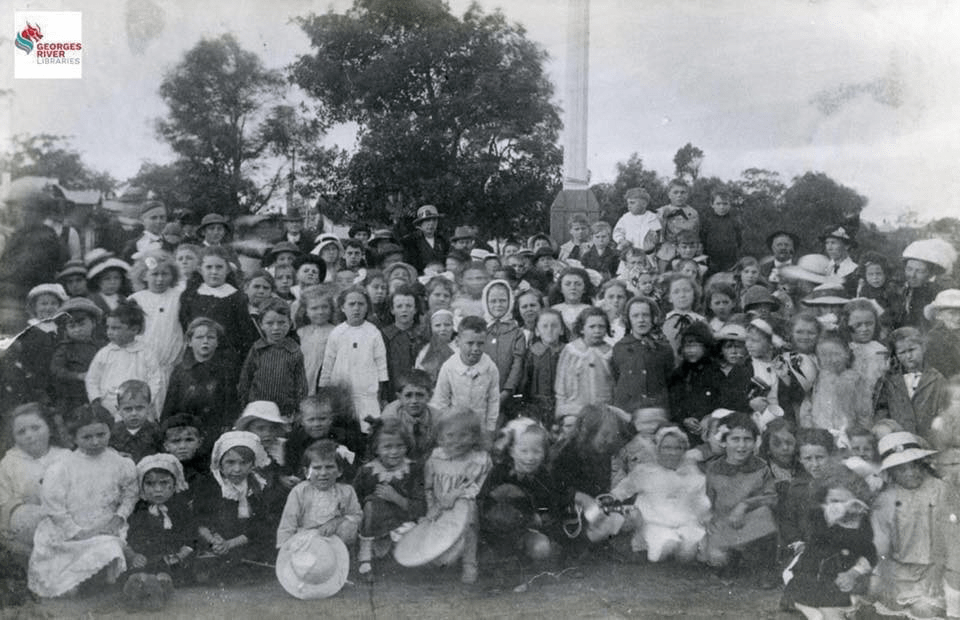
#OnThisDay 27 May 1916, Hurstville South Public School held its first sports day. The Parents’ and Citizens’ Association had held working bees prior to prepare a recreation area for the children, removing a number of tree-stumps, and installing a flagpole (pictured). The flagpole was officially used for the first time on this sports day, and what looks like all the pupils in the school were assembled for the photograph. The headmistress was a Miss Hardwick – that may be her i…
See more
— at Hurstville South Primary School
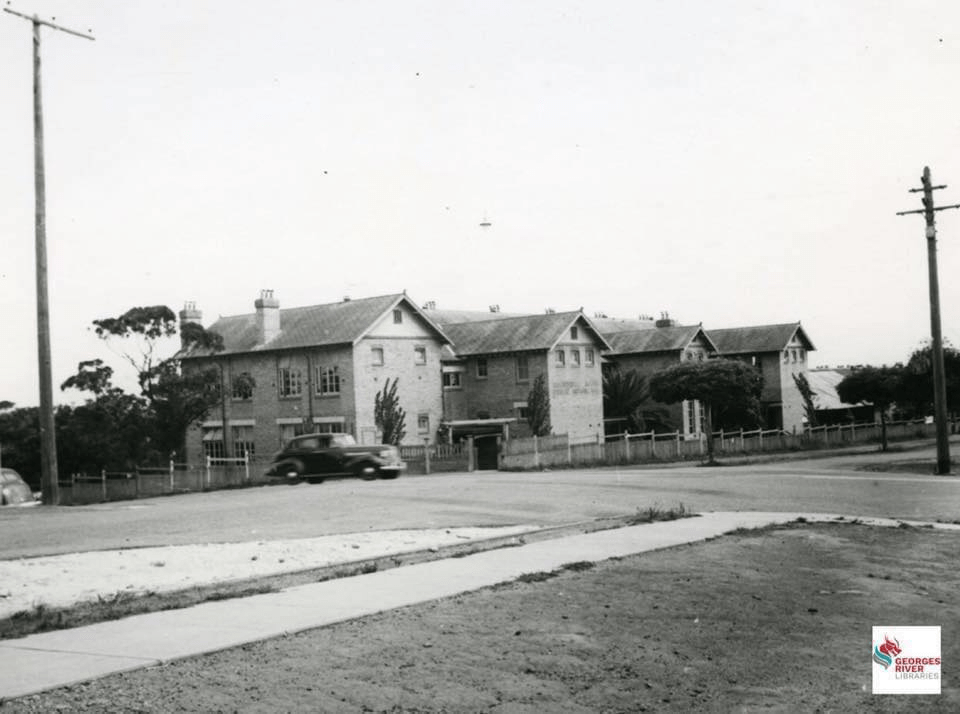
HURSTVILLE SOUTH PUBLIC SCHOOL- 1941
In 1914, local policeman, Constable Joe Winter saw the need for a school at South Hurstville, and mustered support from parents and residents. His application to the Department of Education was successful, and building began on Hurstville South Public School at a site on the corner of Maher Street and Belmore Road (later King Georges Rd). The school cost £535 to build, and was completed by May 1915. There were two classrooms, which could a…
See more
— at Hurstville South Primary School
#OnThisDay 28 May 1989, Land rights campaigner Eddie Mabo pictured —- Eddie Koiki Mabo (1936 – 1992) was an Indigenous Australian man from the Torres Strait Islands known for his role in campaigning for Indigenous land rights and for his role in a landmark decision of the High Court of Australia which overturned the legal doctrine of terra nullius “nobody’s land” which characterised Australian law with regard to land and title.
Mabo was born Eddie Koiki Sambo but he changed his surname to Mabo when he was adopted by his uncle, Benny Mabo. He was born on the island of Mer (Murray Island) in the Torres Strait between mainland Australia and Papua New Guinea.
Mabo married Bonita Neehow, an Australian South Sea Islander, in 1959. The couple had seven children and adopted three more. One daughter, Gail, is an Aboriginal artist and dancer who works with schools in New South Wales as a cultural advisor and serves as the family’s designated spokesperson.
His wife Bonita Mabo died in Townsville on 26 November 2018, aged 75, just days after receiving an honorary doctorate of letters from James Cook University for her contributions to social justice and human rights.
On 21 January 1992, Eddie Mabo died of cancer at the age of 55.
[Photo courtesy Fairfax Archives]
See less

40 years ago #OnThisDay 28 May 1983, Diana, Princess of Wales and Prince Charles pictured at Sydney Opera House during their royal tour.
[Photo courtesy Fairfax Archives]
— at Sydney Opera House.

BEST WISHES 
Kylie Ann Minogue, OBE born #OnThisDay 28 May 1968. An Australian-British singer and actress. She achieved recognition starring in the Australian soap opera Neighbours…. She turns 55 today

 #OnThisDay 29 May 1972, professional golfers and sisters-in-law Dianna and Jan Thomas pictured at practice.
[Photo courtesy Fairfax Archives]

 Nelle's journey